Robotic Arms
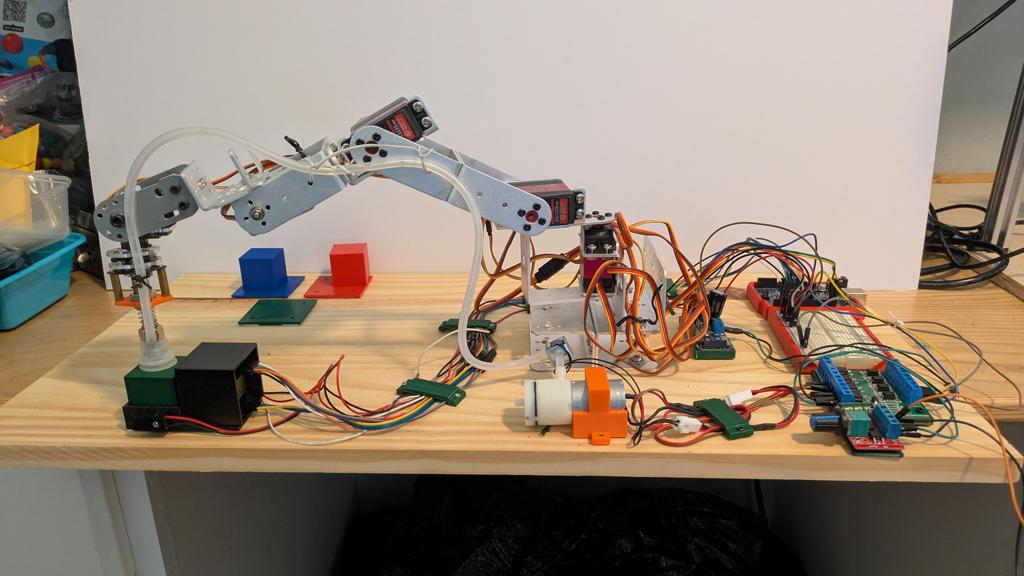
I have created five different robotic armsthat range from simple cardboard to arm with computer vision. The Idea is to show different arms that can be built from around fourth grade to high school. These arms are simple examples and a starting point for students of all ages to imagine and build. Here is a list the arms and the basic use. 1. Cardboard arm driven by syringes fill with water. The student can move the arm around using the syringes to extend or contract the joints. This arm is very simple to build and would be suitable for a fourth or fifth grade science project. The cost is minimal at around 5 to 10 dollars. 2. 3D printed MeArm with cheap servos, two thumb joysticks and a Raspberry Pi Pico. This arm example has been printed to keep costs down but can be purchased and built for around $50. The coding can be done in any python or blocky variant and is aimed at upper elementary and middle school students. 3. Programable robotic arm. This arm has been designed to allow students a hands on arm that can move and pick up and place a block using touch controls then play back the movements to demonstrate simple examples of industrial programming applications. This is a more advanced arm with upgraded servos and is run on any microcontroller. The arm, servos and controller cost around $ 50 to $100 depending on user’s preferences. 4. Simple automation. This arm is more complex and has color sensor and a suction driven pickup that will place a color block on the corresponding color target. This arm is intended to demonstrate simple industrial applications of robots and is designed for middle to high school students. The cost of this arm can range from $50 to $150 depending on student’s implementation. 5. Robotic arm with simple computer vision. This are and camera will demonstrate the use of computer vision to pickup an object that is placed in the arms field of view and then moved to a drop off position. This arm is the most advanced arm in the exhibit and has been designed to demonstrate the very basic use of computer vision in robotics. The arm is a advanced arm with built-in feedback for arm position. Is uses a mid range camera and NVIDIA Jetson Nano computer. This intended for high school students and classrooms. With a cost from $150 and above depending on arm and processor. 6. Pneumatic Artificial Muscle(PAM). This model demonstrates a very basic non-servo method to move an arm. This is the basis of many of the robots you see today. This simple design is a good demonstration of a PAM device. I hope this will inspire the students to go further is to this field. It can be built for under $20 and is a great classroom demonstration.
Maker

Jim Pollock
More to Explore
Browse other exhibits in these categories.